
Traveling With a Senior Dog: A Calm, Safe Guide
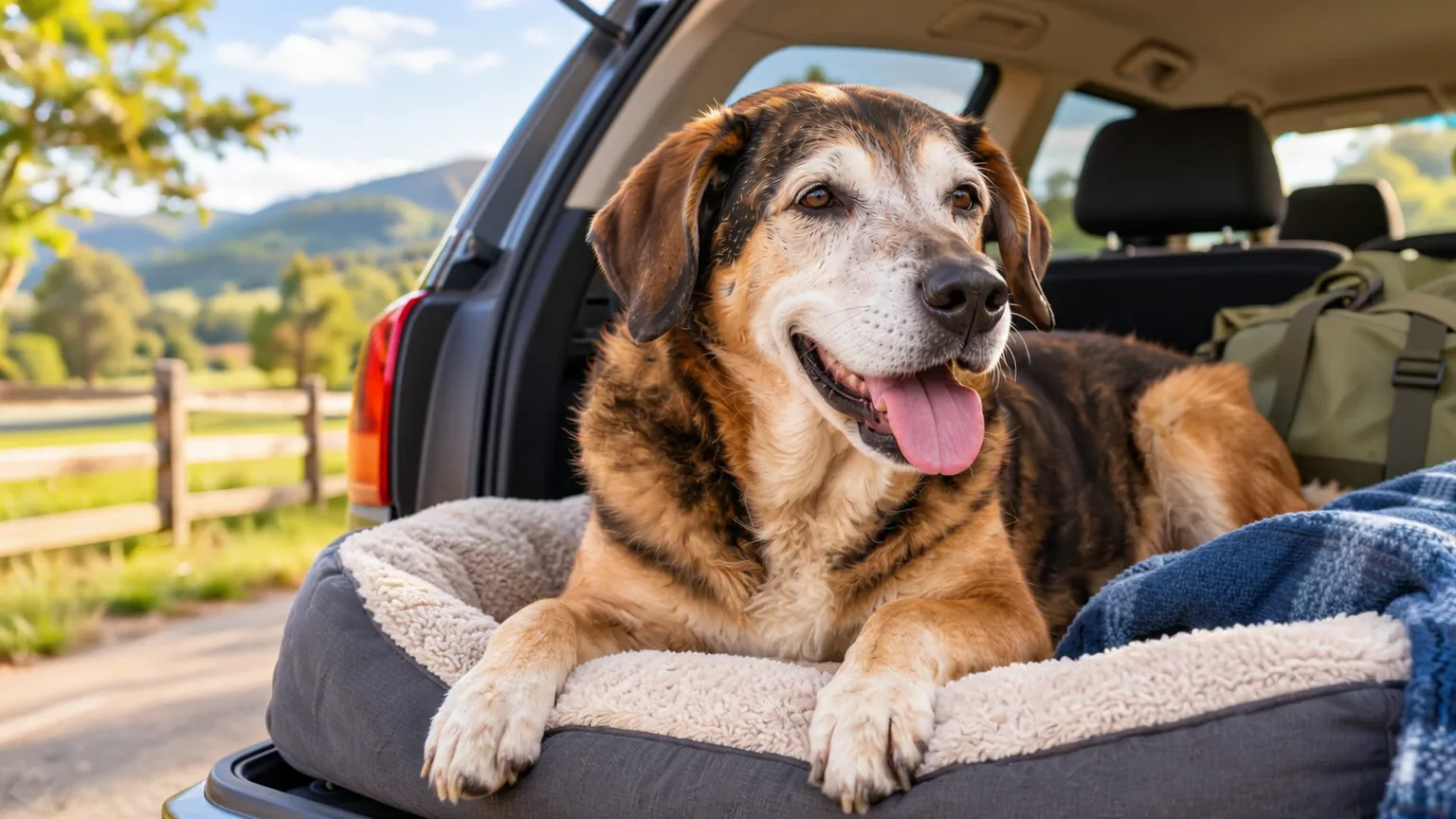
Getting older doesn’t mean a dog has to be left behind. With a little planning, most senior dogs travel just fine — and for many families, bringing the old dog along beats the worry of leaving them. The trick is to travel on their terms: shorter legs, softer surfaces, more stops, and no jumping. A calm, comfortable trip for a senior dog comes down to three things — a cushioned, non-slip place to rest, a ramp so they never jump, and a slower pace with frequent breaks.
I’m a dog owner who has road-tripped with a creaky old dog, not your veterinarian. Before a big trip, get your vet’s okay — especially if your dog has a heart, kidney, or mobility condition — and ask about motion sickness while you’re there.
Before you go
A good trip starts at home. Book a quick vet check if one isn’t recent, and ask two things: is my dog fit to travel, and should we plan for car sickness or anxiety? Pack their regular joint supplement and any medication with a little extra, plus their vet’s number and a copy of records for anywhere you’re headed.
The car setup that matters
| Need | Do this |
|---|---|
| A stable place to lie | A flat, cushioned, non-slip bed or mat, secured |
| Safe restraint | A crash-tested harness or a barrier — never loose |
| Easy in and out | A ramp, so hips and elbows never take a jump |
| Sure footing at stops | Grip socks or a mat for slick rest-stop floors |
| Comfort | Their own bedding, a familiar toy, the cabin kept cool |
The ramp is the piece people forget. An old dog launching in and out of a tall SUV is one hard landing away from a bad flare-up — a ramp removes that risk entirely.
On the road
Drive in shorter stretches than you would alone: a stop every two to three hours for a slow sniff-walk, water, and a chance to stretch stiff joints. Keep the car cool — seniors overheat faster — and skip a big meal right before you leave to settle queasy stomachs. Watch for the quiet signs of discomfort: excessive panting, restlessness, or trembling means it’s time to stop sooner.
At your destination
Recreate their routine as closely as you can. Set up their bed in a quiet corner first thing, keep meal and potty times on the usual clock, and block off any stairs or slick floors they’d struggle with — the same senior-proofing you’d do at home. A dog who knows where their bed is and when dinner comes settles into a strange place far faster.
When to leave them home instead
Honesty helps here. A dog in real pain, with advanced heart or kidney disease, or deep in cognitive decline may find travel more stressful than comforting. In those cases a trusted sitter in the dog’s own home — familiar smells, familiar bed — is often the kinder choice. Let your dog’s comfort, not your wish to bring them, make the call.
The bottom line
Most senior dogs can still enjoy the trip. Get your vet’s okay, build a cushioned and non-slip spot in the car, add a ramp so they never jump, and travel at an old dog’s pace with plenty of stops. Do that, and the miles stay easy on aging joints — and your old friend gets to stay exactly where they want to be: with you.
Frequently asked questions
Is it safe to travel long distances with a senior dog?
Usually yes, with planning and a vet's okay. Keep drives shorter each day, stop every 2–3 hours for a slow walk and water, and bring their own bed and routine. Dogs with heart, kidney, or advanced mobility issues need a specific green light from your vet first.
How do I keep an old dog comfortable in the car?
Give them a flat, cushioned, non-slip spot they can lie on, secured with a harness or a barrier. Keep the car cool, avoid feeding right before departure, and use a ramp so they never have to jump in or out. Familiar bedding helps them settle.
Should I sedate my senior dog for travel?
Only on your vet's advice. Some anxious or car-sick dogs do better with a vet-prescribed anti-nausea or calming medication, but sedatives carry more risk in older dogs. Never use human medication or guess a dose — ask your vet.