
Is My Senior Dog in Pain? 12 Quiet Signs Owners Miss
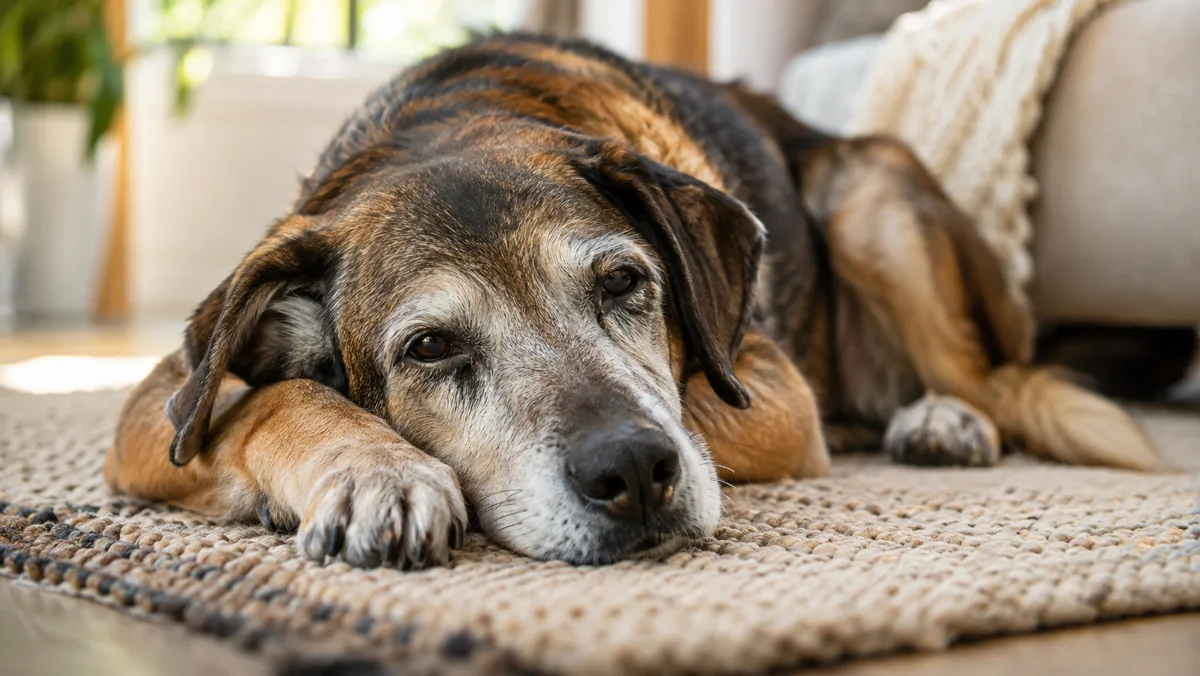
Dogs are wired to hide pain — in the wild, showing weakness is dangerous — so an older dog can hurt for months before an owner notices. The clearest signs aren’t yelps; they’re small changes in how your dog moves, sleeps, eats, and behaves. Here are twelve that are easy to miss, and what each one is usually telling you.
I’m a dog owner sharing what to watch for, not your vet. If you spot several of these, book an exam — most causes of pain in senior dogs are treatable once they’re found.
Movement changes
- Slower to get up, especially after a nap or in the morning.
- Taking stairs one at a time, or hesitating before jumping up.
- “Bunny hopping” or shifting weight off a leg.
- Stiffness that eases once they warm up — a classic arthritis pattern.
Daily-life changes
- Sleeping more, or sleeping in new spots (a hard floor can feel better than a soft bed on sore joints).
- Eating slower or dropping food — often dental pain, which is common and very treatable.
- Accidents in the house from not being able to posture comfortably or get outside in time.
- Less grooming, or over-licking one spot (a joint, a paw).
Mood and behavior changes
- More withdrawn, or the opposite — grumpy or snappy when touched in a certain place.
- Panting at rest, with no heat or exercise to explain it.
- A furrowed, tense face or squinting — pain shows in the eyes and brow.
- Not wanting to be petted or picked up the way they used to.
What to do next
Pick the two or three signs that fit your dog and write them down with when they happen — your vet can do far more with “stiff for 20 minutes every morning for three weeks” than with “he seems old.” From there, the usual toolkit is a vet exam, often a trial of pain relief, and the at-home basics that help almost every senior dog: a supportive orthopedic bed, sure footing on slippery floors, and a daily joint supplement.
The good news: “slowing down” is rarely just age. It’s usually something you can treat — and your dog can’t tell you, so noticing is the whole job.
Frequently asked questions
Do dogs cry or whimper when they're in pain?
Sometimes, but most dogs hide pain and stay quiet. Changes in movement, sleep, appetite, and mood are far more common signals than vocalizing.
Is it arthritis or just old age?
'Old age' isn't a diagnosis — stiffness and slowing down are usually caused by something treatable, most often arthritis. A vet exam tells you what's actually going on.
When should I call the vet about these signs?
If a sign is new, getting worse, or paired with not eating, call your vet promptly. Sudden severe pain, a swollen belly, or trouble breathing is an emergency.