
Keeping a Senior Dog Mentally Sharp: 9 Gentle Games
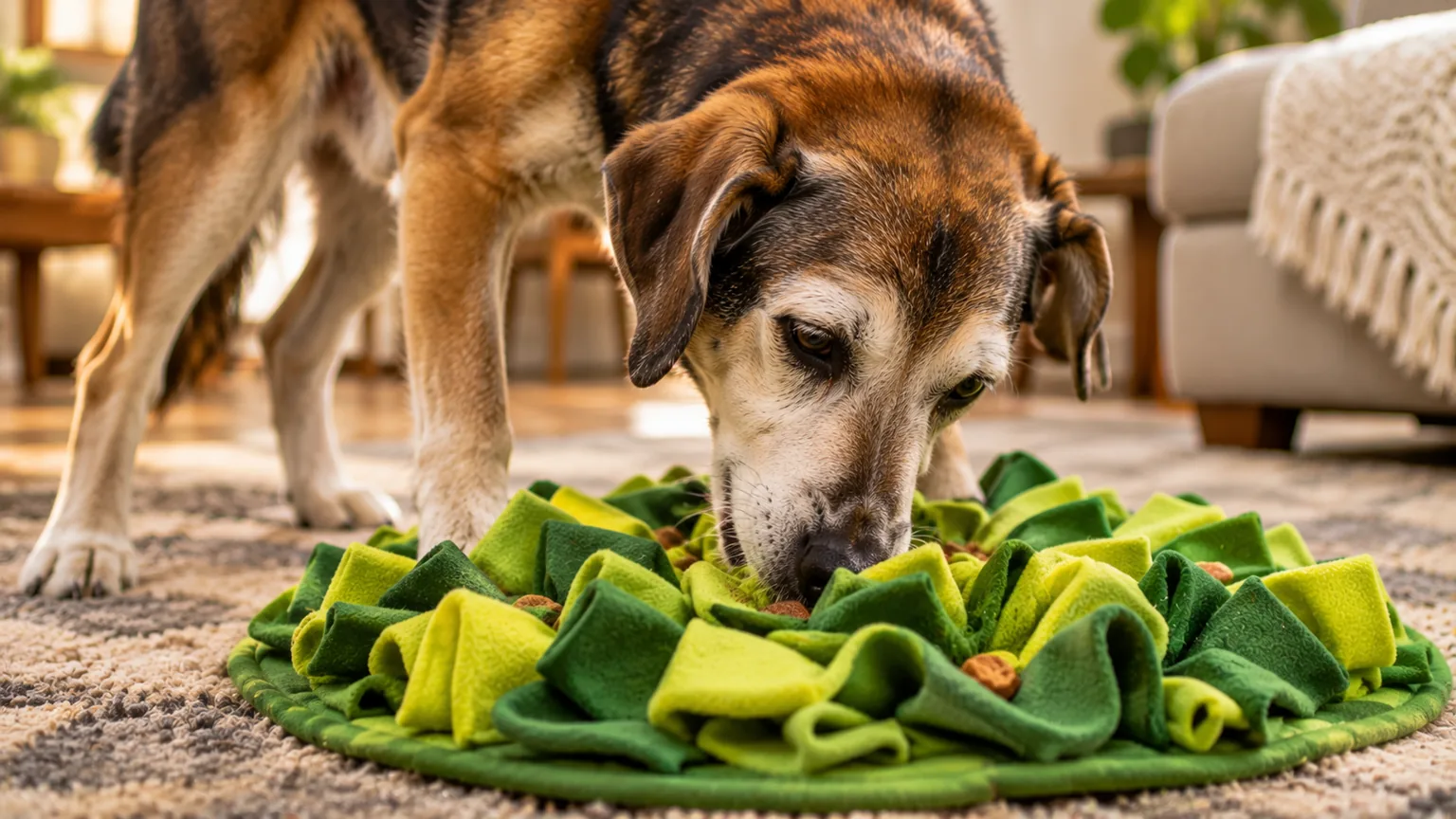
A senior dog’s body slows down long before their mind needs to. Stiff joints might end the long hikes, but the nose, the curiosity, and the quiet joy of figuring something out are all still there — and keeping them active is one of the kindest things you can do for an aging dog. Mental work tires a senior dog in the good way, eases the restlessness of cognitive decline, and keeps them feeling like a participant in the household instead of a passenger — all without asking anything of sore joints.
I’m a dog owner who has kept an old, creaky dog happy and engaged, not your veterinarian. Gentle games are enrichment, not therapy. If your dog seems confused, lost in corners, or anxious at night, mention it to your vet — cognitive decline is real and often treatable.
Why the mind matters as much as the body
As dogs age, less physical exercise can mean a bored, under-stimulated brain — and boredom in a senior often shows up as pacing, whining, night-waking, or clinginess. A few minutes of problem-solving replaces the mental tiredness a long walk used to provide. It’s enrichment scaled to an old dog’s body: all of the engagement, none of the joint strain.
9 gentle games
- Snuffle mat. Scatter kibble in a fabric mat and let the nose do the work. Pure, low-impact joy for a dog who can’t run anymore.
- The muffin-tin game. Hide treats in a muffin tin under tennis balls. Your dog nudges each ball off to find the prize.
- Name that toy. Teach one toy’s name at a time, then ask for it. Slow, rewarding, and great for bonding.
- Towel burrito. Roll treats loosely in a towel for your dog to unroll. Adjust the tightness to keep it winnable.
- Find it. Hide a treat in an easy spot and send them to sniff it out. Build up to a gentle room-wide search.
- Slow puzzle feeders. Turn a meal into a 10-minute project with a simple sliding puzzle bowl.
- Three-cup shuffle. Hide a treat under one of three cups and shuffle gently. Keep it easy — the win is the point.
- New-texture walks. If your dog still strolls, let them sniff and choose the route. Sniffing is mental work.
- A short trick refresh. Revisit an old cue like “shake” or “touch.” Familiar success feels wonderful to an old dog.
Match the game to the dog
| If your dog… | Try |
|---|---|
| Loves food above all | Snuffle mat, puzzle feeders, muffin tin |
| Has fading eyesight | Nose games — find it, snuffle mat |
| Gets frustrated easily | Towel burrito, three-cup shuffle (kept easy) |
| Still enjoys a short walk | Sniff-led “choose your own route” walks |
Keep it kind
Three rules keep brain games a pleasure instead of a chore. Keep them short — five to ten minutes. Keep them winnable — an old dog should succeed far more than they fail. And meet them where they rest: play on a soft, supportive bed or a rug, not a slick floor, so sore joints never pay for the fun. If your dog is uncomfortable even lying down to play, that’s worth reading up on the quiet signs of pain.
The bottom line
Your senior dog’s mind is still hungry even when their body has slowed. A few minutes of sniffing, searching, and gentle problem-solving each day keeps them bright, settled, and connected to you. Pick two or three games from the list, keep them short and winnable, and you’ll give your old dog something a nap never can — the simple pride of figuring something out. For more ideas, see our picks for low-impact enrichment toys.
Frequently asked questions
Can mental games really slow down aging in dogs?
They can't stop aging, but regular mental work keeps an older dog engaged, confident, and connected — and there's good evidence that novelty and problem-solving help maintain cognitive function. It also eases the restlessness and night-waking that come with canine cognitive decline.
My senior dog sleeps most of the day. Is that normal?
More sleep is normal with age, but a dog who's checked out entirely — no interest in food games, sniffing, or you — is worth a vet visit. Sometimes 'just old' is pain or cognitive decline that can be helped.
How long should a brain game last for an old dog?
Short and sweet. Five to ten minutes, once or twice a day, is plenty. Stop while your dog is still winning and interested, not when they're tired or frustrated.