
Traction Socks & Floor Grips for Slipping Senior Dogs (2026)
As an Amazon Associate we earn from qualifying purchases. Some links are affiliate links; buying through them costs you nothing extra. This content is informational and is not a substitute for advice from your veterinarian.
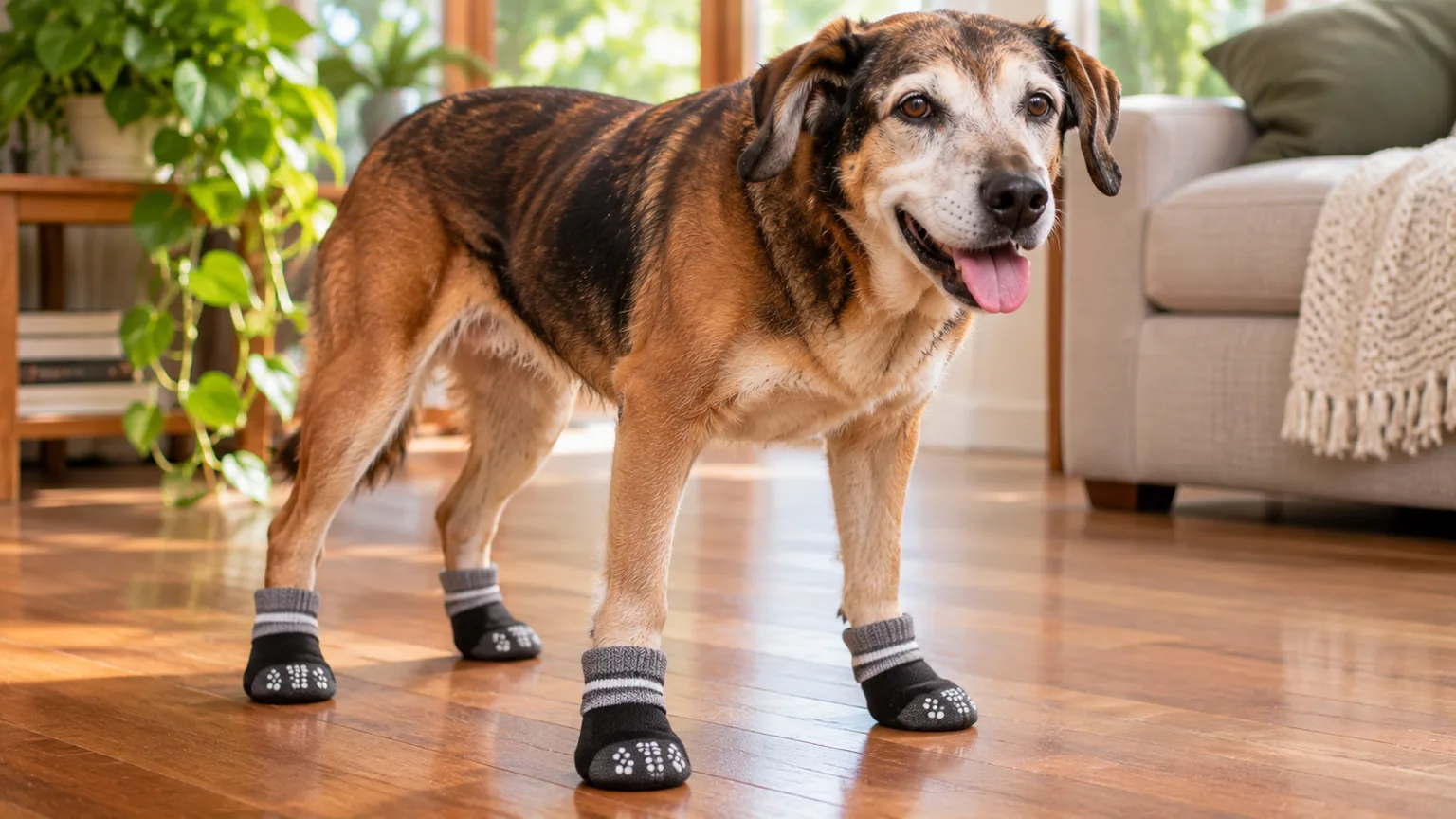
If your senior dog has started splaying their legs on the kitchen floor, bracing before a hallway, or avoiding the slick spots altogether, they’re telling you something: the floor has become scary. Bare hardwood and tile give aging dogs no grip, and every slip strains already-sore joints and shakes their confidence. The fix is traction — some mix of grippy socks, nail toe grips, and rugs along the routes your dog uses most — and it’s one of the cheapest, fastest comfort upgrades you can make.
I’m a dog owner who has watched an old dog lose confidence on a slick floor, not your veterinarian. Traction helps a dog move safely; it doesn’t treat the underlying arthritis. If your dog is slipping a lot or suddenly weak, get a vet exam first.
Why slipping matters more than it looks
A young dog slips and shrugs it off. For a senior with arthritis or weak back legs, every skid does two things: it jars painful joints, and it teaches fear. A dog that’s afraid of the floor moves less, and a dog that moves less stiffens up faster — a quiet downward spiral. Restoring grip breaks it.
The three things that work
1. Toe grips (best for all-day wear)
Dr. Buzby's ToeGrips for Dogs
Small rubber rings that slip onto the nails and grip the floor through the dog's natural stance. Dogs barely notice them, so they're ideal for all-day traction. Measure nail width and size up if between sizes.
Toe grips are the quiet workhorse. Because they leave the paw pad uncovered, most dogs forget they’re wearing them, which means they stay on and keep working all day.
2. Grip socks (best for cushioning and short stretches)
Non-Slip Dog Socks with Adjustable Straps
Rubberized grip on the sole plus straps that keep them from sliding off. Good for added cushioning on short, supervised walks across slick rooms. Get the strap version — strapless socks slide off.
Socks add padding and warmth as well as grip, which some arthritic dogs appreciate. The catch is fit: without straps they wander off within minutes.
3. Rugs and runners (best value, zero fuss)
The humblest fix is often the best. A few washable runners along your dog’s main paths — bed to water bowl, couch to door — give guaranteed grip with nothing to put on or take off. Pair them with the stretches of bare floor you simply cover.
Which to choose
| Your situation | Start with |
|---|---|
| Dog won’t tolerate anything on their paws | Rugs/runners + toe grips |
| Needs all-day traction | Toe grips |
| Slips only in one or two rooms | Runners there + socks for crossings |
| Wants extra cushioning/warmth | Grip socks with straps |
Make it work
Introduce anything new calmly: let your dog sniff the socks or grips, put them on right before something good (a meal, a short walk), and keep the first sessions brief. Trim the nails first — long nails make slipping worse and throw off a dog’s stance. And watch the toes the first day with grips on, to be sure the fit is comfortable.
Traction pairs naturally with the rest of a senior-proofed home: a supportive orthopedic bed to rest on, a ramp instead of stairs or a jump, and joint support working from the inside.
The bottom line
Slippery floors quietly steal a senior dog’s confidence and strain their joints with every skid. Lay down runners on the main routes, add toe grips for all-day grip, and keep a pair of strapped grip socks for the slick crossings you can’t rug. It costs little, takes a weekend, and you’ll often see your old dog walk tall again within days.
Prices and availability change — Amazon shows the current price when you click through.
Frequently asked questions
Do dog traction socks actually stay on?
The good ones do, if you size them right and they have adjustable straps. Measure your dog's paw width and pick a snug (not tight) fit. Socks without straps tend to slide off an active dog within minutes — toe grips or rugs are a steadier bet for those dogs.
Are toe grips or socks better for hardwood floors?
Toe grips (small rubber rings on the nails) give grip without covering the paw, so dogs tolerate them well for all-day wear. Socks give more cushioning and cover the whole paw but can slip off. Many owners use grips for daily traction and socks for short, supervised stretches.
What's the cheapest way to help my dog stop slipping?
Runners and washable rugs along your dog's main routes — bed to door, around the food bowl — cost the least and help the most. Add socks or toe grips for the stretches of bare floor you can't cover.