
How Often Should a Senior Dog See the Vet?
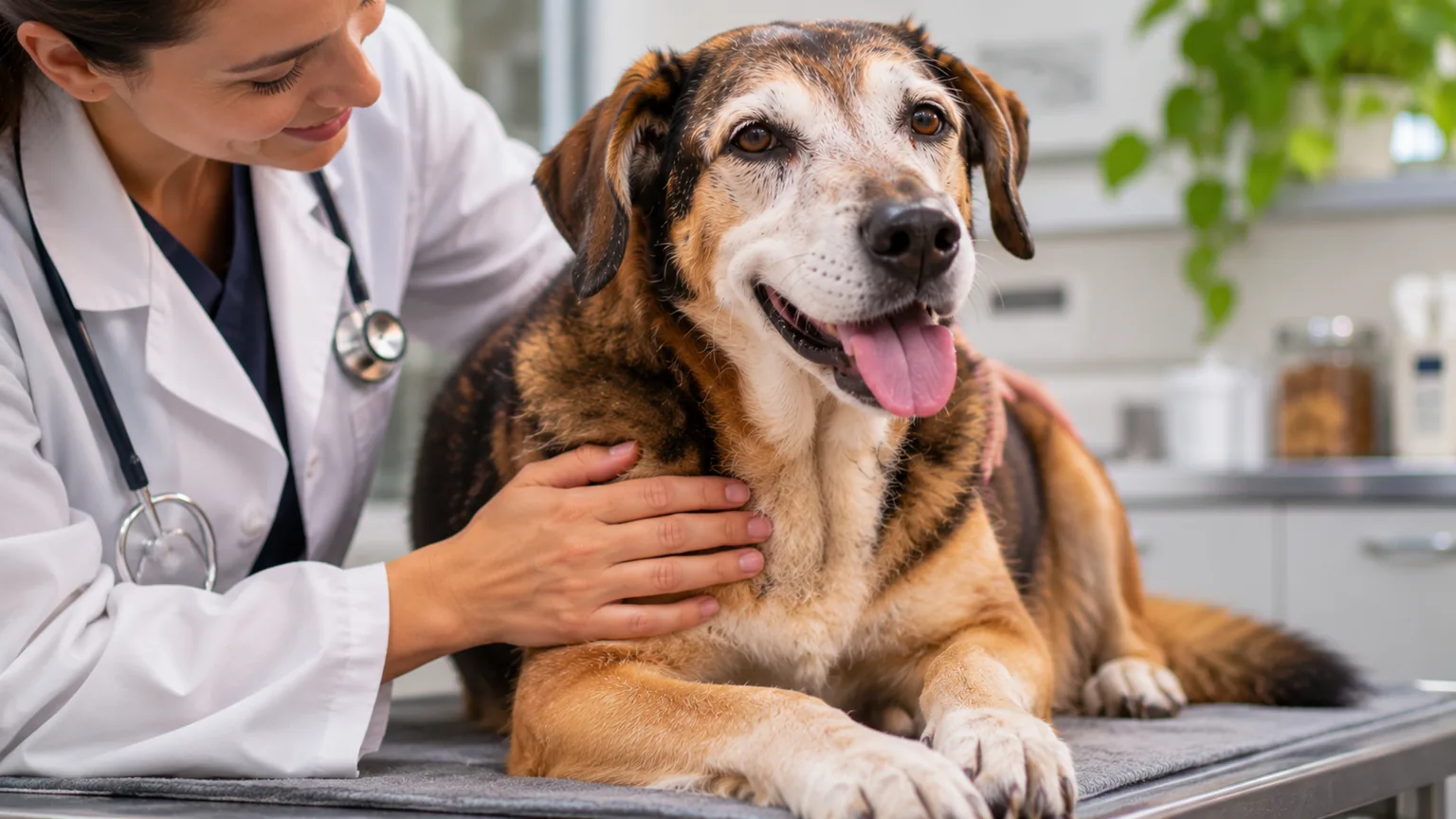
When a dog is young and healthy, one vet visit a year is plenty. But aging changes the math. Older bodies develop problems faster and hide them better, and the gap between “fine” and “seriously ill” can be short. The standard guidance for senior dogs is a wellness check every six months — twice as often as a young adult — and more often still if your dog has a diagnosed condition that needs monitoring.
I’m a dog owner who has navigated the senior years with more than one dog, not your veterinarian. This explains the general rhythm of senior care; your own vet will tailor it to your dog’s breed, size, and health.
Why twice a year, not once
Six months is a long time in an old dog’s life — proportionally, it’s several human years. Conditions common in seniors (kidney disease, arthritis, dental disease, heart changes, tumors) can appear and progress within that window. Seeing the vet every six months means problems get caught while they’re small and far more treatable, rather than after they’ve become a crisis.
What the senior wellness visit covers
A senior check is more thorough than a young dog’s annual. Expect:
- A full physical — weight, heart and lungs, joints, eyes, mouth, lumps, and belly.
- Baseline bloodwork — organ function, red and white cells, often thyroid. This is the big one: it reveals what you can’t see from the outside.
- Urine test — an early window on the kidneys and bladder.
- A conversation — your observations matter. Changes in drinking, appetite, stairs, sleep, and bathroom habits all tell a story.
That baseline bloodwork is worth its cost. Repeated every six months, it lets your vet spot a trend — a kidney value creeping up, a thyroid slowing down — long before your dog feels unwell.
How often for a dog with a condition
| Situation | Typical rhythm |
|---|---|
| Healthy senior | Every 6 months |
| Arthritis / mobility issues | Every 6 months, sooner if it worsens |
| Kidney, heart, liver, or thyroid disease | Every 3–4 months |
| On a new medication | As your vet directs, often 2–4 weeks in |
Don’t wait for the next visit if…
A schedule is a baseline, not a rule to wait behind. Call your vet promptly — regardless of when the next check is due — if you notice:
- A sudden drop in appetite, or not eating for more than a day
- A big change in thirst or urination
- Trouble breathing, collapse, or new weakness in the back legs
- Repeated vomiting or diarrhea
- A hard time getting up, or crying out in pain
- A new lump that grows, or any lump that changes fast
Many of these can be the quiet signs of pain or illness catching up — and they’re exactly what a between-visits call is for.
Make the visit easier on an old dog
Senior dogs often find the clinic stressful, and a stiff body makes the trip harder. Book a quiet time of day, bring a non-slip mat or their own towel for the slick exam table, and ask about a mobile vet if travel is genuinely painful. Between visits, a simple monthly home checklist gives your vet the real-world detail that makes each appointment count.
The bottom line
A healthy senior dog should see the vet about every six months, and a dog with a diagnosed condition more often. The point isn’t to medicalize your dog’s old age — it’s to catch the fixable things early, keep them comfortable, and buy more good days. Keep the six-month rhythm, trust your gut between visits, and call sooner whenever something changes fast.
Frequently asked questions
How often should a senior dog go to the vet?
Twice a year is the standard recommendation for senior dogs, versus once a year for healthy adults. Dogs with a diagnosed condition — arthritis, kidney disease, heart disease — often need checks every 3–4 months so treatment can be adjusted as things change.
At what age is a dog considered senior?
It depends on size. Giant breeds are senior around 6, large breeds around 7, and small breeds around 10–11. A good rule: when the muzzle grays and the pace slows, it's time to start senior-level care.
What does a senior wellness exam include?
A nose-to-tail physical plus baseline bloodwork and often a urine test. These catch kidney, liver, thyroid, and other issues early — while they're still manageable — long before you'd notice symptoms at home.