
Senior Dog Wellness Checklist: What to Watch Every Month
The most useful thing you can do for an aging dog isn’t any single product — it’s noticing change early, while it’s still small and treatable. Senior dogs hide problems well, and a once-a-month home check turns “he just seems older” into specifics your vet can act on. Spend ten minutes a month running through the eight areas below, jot down anything new, and you’ll catch most senior-dog issues long before they become emergencies.
I’m a dog owner sharing a routine that’s helped me, not your veterinarian. This checklist is for spotting changes early — it doesn’t replace your dog’s regular vet exams.
The monthly head-to-tail check
- Weight. Weigh your dog (or hug-and-weigh on a bathroom scale) and write it down. Steady, unexplained loss or gain is one of the earliest signals of illness.
- Eating & drinking. Any new pickiness, dropping food, or a sudden jump in thirst? More drinking and peeing can point to kidney or hormone issues worth a vet call.
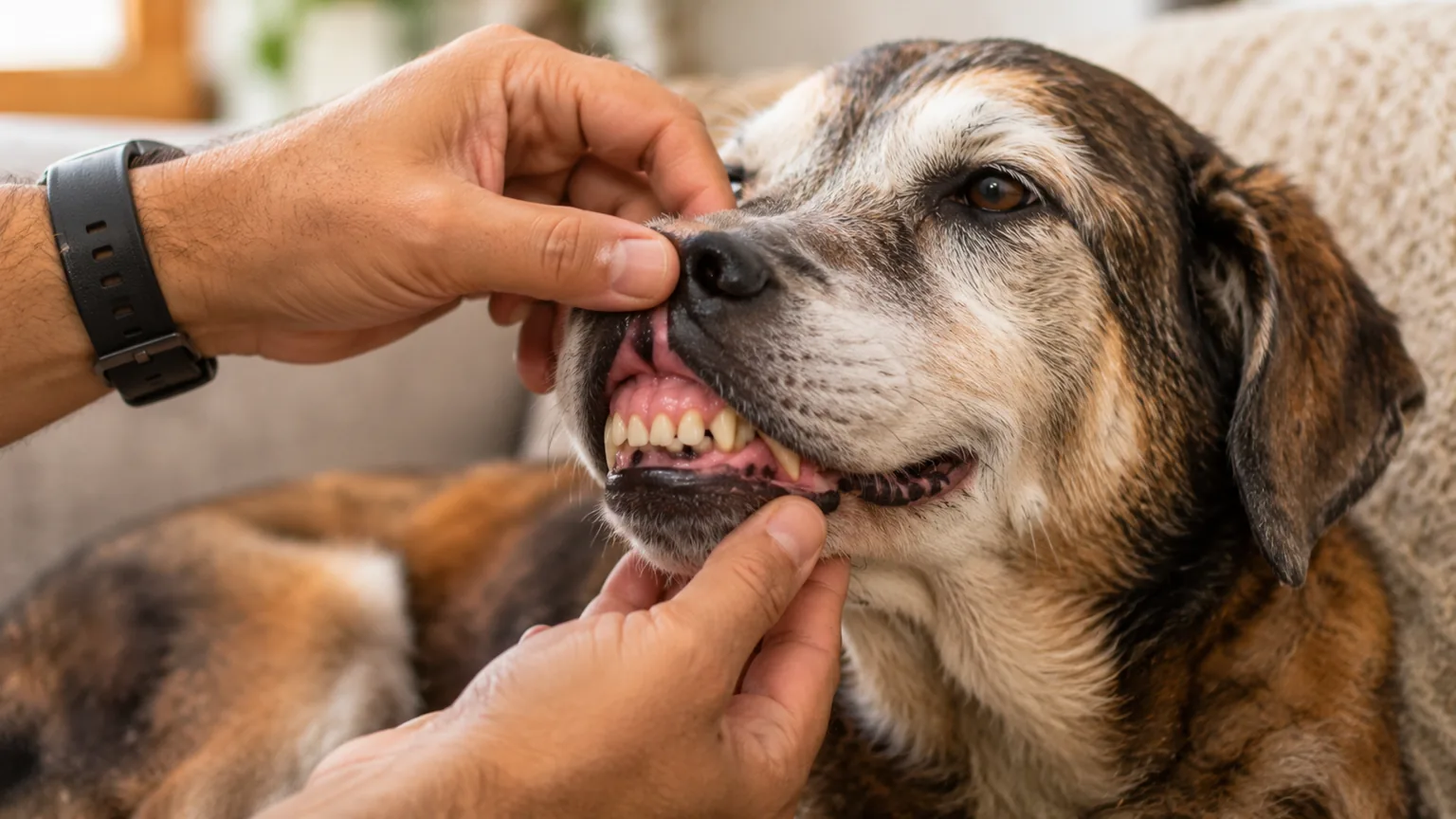
- Mouth & gums. Lift the lip: gums should be pink and moist. Check for brown tartar, red gums, broken teeth, or bad breath — dental pain is common, painful, and very treatable.
- Lumps & skin. Run both hands slowly over the whole body. Note any new lump’s size and spot (a quick phone photo with a coin for scale helps). New or fast-growing lumps get a vet visit.
- Eyes & ears. Look for cloudiness, redness, discharge, or a new reluctance to be touched near the ears. Some cloudiness is normal aging; redness and pawing are not.
- Movement. Watch your dog get up, take a few stairs, and walk. Stiffness, limping, or quiet signs of pain are your cue to look at joint support.
- Toilet habits. Note straining, accidents, blood, diarrhea, or constipation. Patterns matter more than one-off days.
- Mood & sleep. More withdrawn, more clingy, pacing at night, or confused in familiar places? Behavior shifts can flag pain or cognitive change.
A simple way to track it
Keep it stupidly easy or you won’t do it. A note on your phone with the date, the weight, and anything that changed is plenty. The value isn’t any single reading — it’s the trend. “Lost two pounds three months running” or “stiff every morning for a month” tells your vet far more than “he seems off.”
When to skip the checklist and just call
Some things don’t wait for the monthly routine. Call your vet promptly for a swollen or hard belly, trouble breathing, collapse, pale gums, repeated vomiting, sudden severe pain, or straining to pee with nothing coming out.
The bottom line
A ten-minute monthly once-over is the cheapest senior-dog insurance there is. Pair it with your vet’s regular exams, support the basics — joints, comfortable rest, and sure footing — and most problems get caught while they’re still easy to fix.
Frequently asked questions
When is a dog considered a senior?
It depends on size. Giant breeds reach senior status around 6 years, large breeds around 7, and small breeds around 9–10. Smaller dogs tend to age more slowly, so a 10-year-old terrier may be far spryer than a 7-year-old mastiff.
How often should I do a home check on my senior dog?
A quick head-to-tail check once a month is a good rhythm — often enough to catch slow changes like a new lump, weight loss, or stiffness, without being a chore. Weigh monthly if you can.
What senior dog changes are an emergency?
Call your vet right away for a swollen or hard belly, trouble breathing, collapse, repeated vomiting, pale gums, sudden severe pain, or inability to pee. These can't wait for the monthly check.