
Low-Impact Enrichment Toys for Older Dogs (2026 Picks)
As an Amazon Associate we earn from qualifying purchases. Some links are affiliate links; buying through them costs you nothing extra. This content is informational and is not a substitute for advice from your veterinarian.
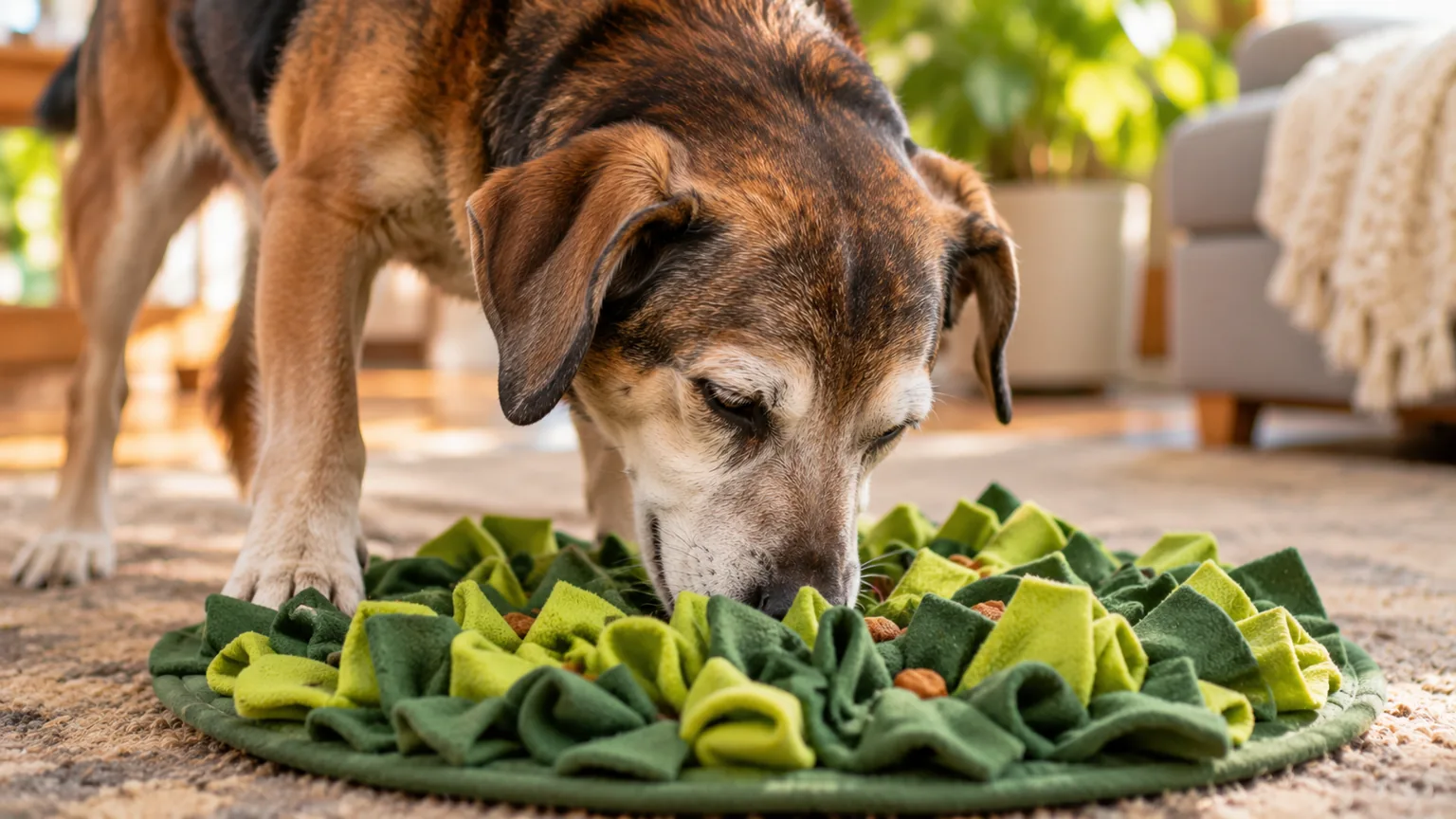
When a dog can’t run, fetch, or chew the way they used to, it’s easy to assume playtime is over. It isn’t — it just moves from the body to the nose and the brain. The best enrichment toys for an older dog reward sniffing and licking instead of hard chewing or jumping: snuffle mats, lick mats, and soft puzzle feeders keep an aging mind busy while going easy on teeth and joints. They’re also wonderfully calming, which helps the night-time restlessness and anxiety that often creep in with age.
I’m a dog owner sharing what’s worked for my senior dogs, not your vet. If your dog seems suddenly confused, anxious, or is pacing at night, mention it at your next visit — it can be a sign of canine cognitive change, which there’s help for.
Why gentle enrichment matters more as dogs age
A senior dog’s world shrinks: shorter walks, less play, more sleep. That quiet can tip into boredom, anxiety, and a duller mind. Low-impact enrichment gives them a “job” they can still win at — and the sniffing and licking themselves are naturally soothing. Think of it as physical therapy for the brain, and a gentle way to tire a dog who can’t do a long walk anymore.
Our picks
Snuffle Mat for Dogs
Hide a few pieces of kibble in the fabric and let your dog's nose do the work. All sniffing, zero impact — the single best starter toy for a stiff senior.
Lick Mat with Suction Base
Spread on a little wet food, plain yogurt, or pumpkin and it becomes a 10-minute calming ritual. Great before vet visits or at bedtime, and gentle on sore mouths.
Outward Hound Level 1 Puzzle Feeder
A simple sliding puzzle that rewards nose nudges, not force. Start at the easiest level — seniors enjoy the win more than the challenge.
How to use them without frustrating your dog
Start easy. Make the first few rounds almost too simple so your dog succeeds fast and learns the toy is fun, not frustrating. Keep sessions to 5–15 minutes, do them when your dog is alert (often after a nap), and always end on a success. If your dog walks away or gets huffy, the puzzle is too hard — dial it back.
A nice bonus: serving part of a meal through a snuffle mat or lick mat slows down fast eaters and turns feeding time into the day’s enrichment.
The bottom line
Don’t retire your older dog from play — just change the game. A snuffle mat for the nose, a lick mat for calm, and an easy puzzle feeder for a little brain work cover the whole range, cost little, and ask nothing of sore joints. Pair them with the mental-and-physical basics — gentle movement, comfortable rest, and watching for signs of pain — and your dog keeps the thing play was always really about: feeling like part of the family.
Prices and availability change — Amazon shows the current price when you click through.
Frequently asked questions
Do senior dogs still need enrichment?
Yes — arguably more than ever. Gentle mental work keeps an aging brain engaged, eases boredom and anxiety, and gives a dog who can't run far a satisfying 'job.' It's one of the best things for cognitive health in older dogs.
What toys are best for a dog with few teeth or sore joints?
Nose-and-brain toys beat tug-and-fetch: snuffle mats, lick mats, and soft puzzle feeders. They reward sniffing and licking rather than hard chewing or jumping, so a dog with dental or joint issues can fully enjoy them.
How long should an enrichment session be for a senior dog?
Short and sweet — 5 to 15 minutes, once or twice a day. Watch for fatigue or frustration and end on a win. It's about gentle engagement, not tiring them out.