
Dog Wheelchairs: When They Help and How to Choose (2026)
As an Amazon Associate we earn from qualifying purchases. Some links are affiliate links; buying through them costs you nothing extra. This content is informational and is not a substitute for advice from your veterinarian.
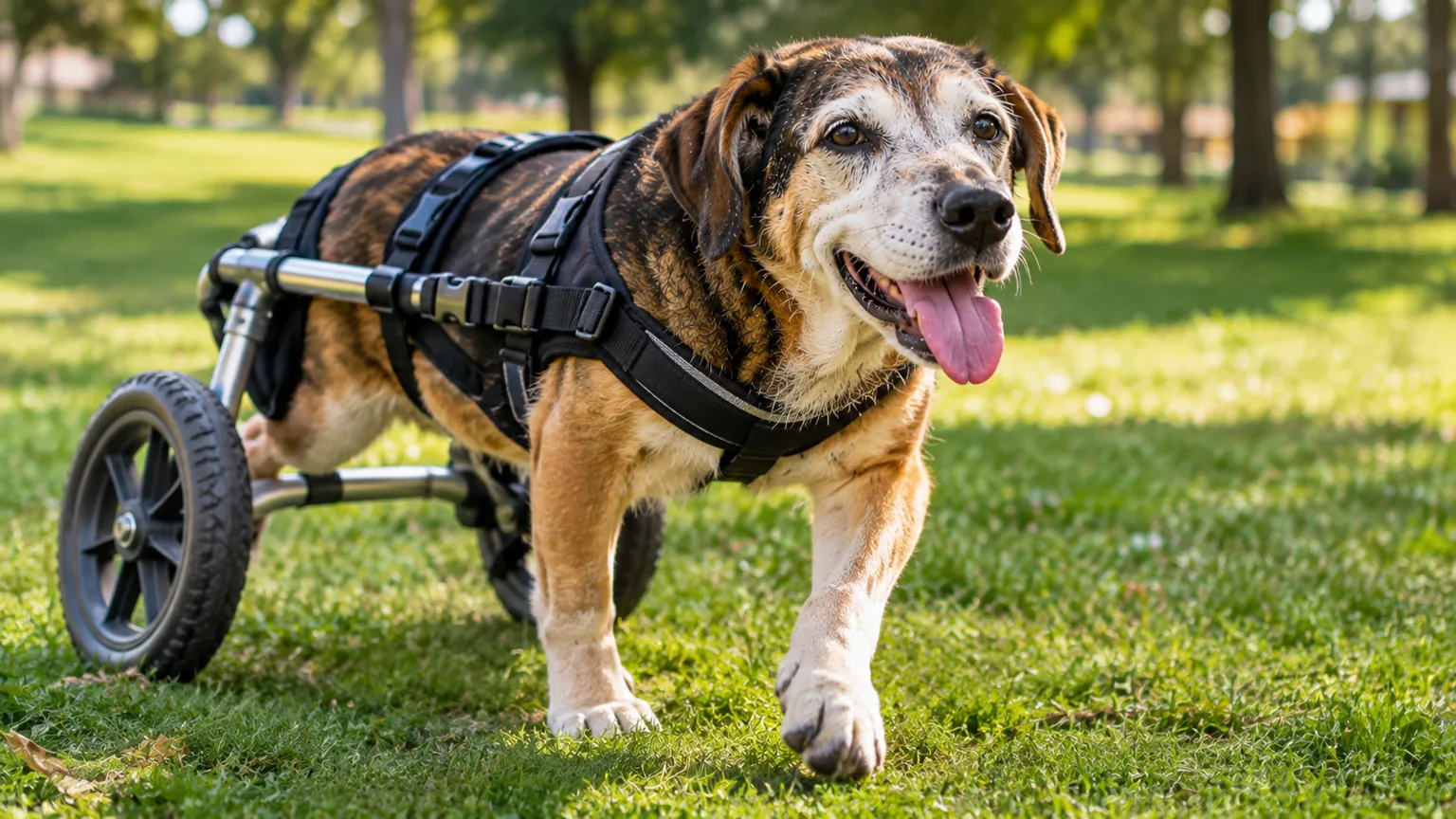
A dog wheelchair can look dramatic the first time you see one — but to the dog rolling along, sniffing, and keeping up with the family, it’s pure freedom. For a senior dog whose back legs have given out but whose spirit hasn’t, the right cart gives back the two things that fade fastest with lost mobility: exercise and independence. A wheelchair is the right call when a dog still wants to move and enjoy life but can’t walk far enough to do it — and when simpler supports like a lift harness aren’t enough anymore.
I’m a dog owner, not your veterinarian or a mobility specialist. Before buying a cart, have your vet confirm the diagnosis and that a wheelchair suits your dog’s condition — some conditions need rest or treatment first, not wheels.
Is it the right time?
A wheelchair helps the dog who is alert and willing but physically can’t. Good signs it’s worth considering:
- The back legs are weak or paralyzed, but the front end is strong.
- Your dog is still eating, engaged, and interested in the world.
- Short supported walks leave them wanting more, not exhausted.
- A lift harness helps, but can’t give them the distance they clearly want.
If a dog is in uncontrolled pain, declining fast, or no longer interested in getting up, wheels aren’t the answer — that’s a quality-of-life conversation with your vet instead.
Try these first (or alongside)
Plenty of dogs regain enough mobility without a cart, or use one only for longer outings. Start with the basics: a lift harness for support, good traction around the house, ramps instead of stairs, and joint support working from the inside. Many dogs do best with a mix — the house set up for easy days, the wheelchair for the walk they still love.
Choosing and fitting one
Adjustable Rear-Support Dog Wheelchair
Look for a cart that adjusts in height, length, and width, so it can be dialed to your dog and tweaked as their condition changes. Measure hip height, back length, and weight, and follow the brand's sizing chart exactly — fit is the whole game.
Fit matters more than brand. A cart that’s too tall, too long, or too loose rubs and frustrates; a well-fitted one your dog forgets they’re wearing. Introduce it slowly — a few happy minutes at a time on a flat, grassy surface, paired with treats — and let your dog build up to longer rolls. Check regularly for rubbing at the straps and keep the harness points clean.
The bottom line
A wheelchair isn’t giving up — for the right dog, it’s the opposite. If your senior still wants to go but their back legs can’t carry them, and simpler supports have reached their limit, a well-fitted adjustable cart can hand back their walks, their sniffs, and their sense of being a dog. Get your vet’s okay, measure carefully, choose adjustable, and introduce it gently.
Prices and availability change — Amazon shows the current price when you click through.
Frequently asked questions
When does a dog actually need a wheelchair?
When weakness or paralysis in the back legs stops a dog from walking enough to stay happy and healthy — but the dog is still alert, eating, and enjoying life. A wheelchair restores mobility and the exercise, sniffing, and independence that come with it. It's for dogs who want to go but can't, not a last resort.
How do I measure my dog for a wheelchair?
Most brands need the height from the ground to the top of the back (at the hips), the length of the back, and the dog's weight. Measure carefully and follow the brand's chart exactly — fit is everything. Adjustable models are worth it for a dog whose condition may change.
Are there alternatives to a wheelchair?
Yes, and they're worth trying first or alongside. A lift harness or sling supports the back end for short walks, and good traction, ramps, and joint support help a dog who's weak but still walking. A wheelchair is the step up when those aren't enough for the distance your dog wants to go.