
Best Dental Chews & Breath Care for Senior Dogs (2026)
As an Amazon Associate we earn from qualifying purchases. Some links are affiliate links; buying through them costs you nothing extra. This content is informational and is not a substitute for advice from your veterinarian.
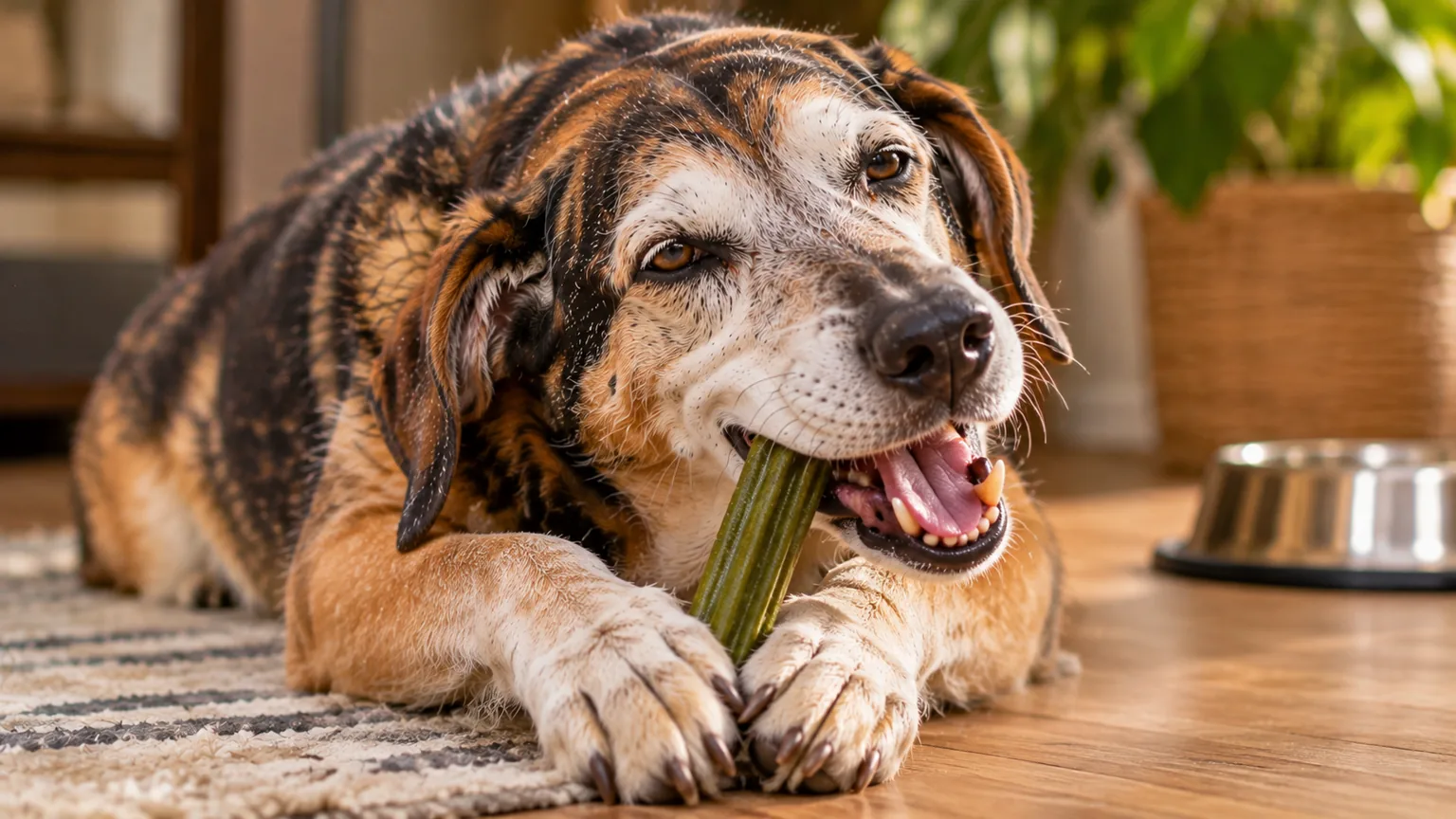
Dental disease is one of the most common health problems in senior dogs — and one of the easiest to miss, because the signs hide behind a wagging tail. That “old dog breath” is usually not normal; it’s often the smell of a painful mouth. The good news is that a little daily care goes a long way. For a senior dog who won’t sit still for a toothbrush, a daily VOHC-accepted dental chew is the single most practical habit to slow plaque, freshen breath, and protect an aging mouth — alongside regular vet checks.
I’m a dog owner, not your veterinarian. Dental chews support a healthy mouth; they don’t cure existing dental disease. Persistent bad breath, drooling, or a dog chewing on one side needs a vet exam — those point to a problem a chew can’t fix.
Why a senior’s mouth matters so much
Dental disease isn’t just about teeth. An infected, painful mouth makes eating hard, drops a dog’s quality of life, and the bacteria can strain the heart and kidneys over time. For a senior already managing other things, a sore mouth is a hidden drain on comfort and health. Catching and managing it is one of the higher-impact things you can do — which is why dental checks are part of every senior vet visit.
What actually helps
A daily VOHC dental chew
Greenies Original Dental Dog Treats
A VOHC-accepted daily chew that most dogs treat as a reward. Pick the size made for your dog's weight, and choose a softer formula if their teeth are worn. One a day is the habit that matters.
The key letters are VOHC — the Veterinary Oral Health Council seal means the chew is actually proven to reduce plaque and tartar, not just marketed that way. A chew your senior looks forward to is a dental routine you’ll both keep.
Brushing, if your dog allows it
Dog Toothbrush & Enzymatic Toothpaste Kit
The gold standard is still brushing. Use dog-specific enzymatic toothpaste (never human toothpaste), go slow, and build up a few teeth at a time with lots of praise. Even a few days a week helps.
Brushing beats everything, but it only works if your dog tolerates it. Introduce it gently and never force it — a stressed senior and a toothbrush is a losing battle. For many old dogs, a chew plus occasional brushing is the realistic, sustainable combo.
Choose chews carefully for old teeth
| Do | Avoid |
|---|---|
| VOHC-accepted chews sized for your dog | Very hard bones, antlers, hooves |
| Softer textures for worn senior teeth | Chews small enough to swallow whole |
| Supervising the first few chews | Leaving a dog alone with a new chew |
| A vet check before starting, if teeth look bad | Using chews to “treat” visible dental disease |
Aging teeth are more brittle, so the rock-hard chews marketed for heavy chewers can crack them. Softer is safer for a senior.
The bottom line
A senior dog’s mouth is easy to forget and painful to neglect. Build a simple daily habit — a VOHC-accepted dental chew, brushing when your dog allows it — and keep dental checks on the calendar at every vet visit. It freshens the breath, yes, but more importantly it spares your old dog a sore mouth and protects the rest of their body too. Start today; their comfort tomorrow depends on it.
Prices and availability change — Amazon shows the current price when you click through.
Frequently asked questions
Do dental chews actually work for dogs?
The good ones help. Chews accepted by the Veterinary Oral Health Council (look for the VOHC seal) are proven to reduce plaque and tartar. They don't replace brushing or a professional cleaning, but for a senior dog who won't tolerate a toothbrush, a daily VOHC chew is a genuinely useful habit.
My senior dog has bad breath — is that normal?
Persistent bad breath is usually a sign of dental disease, not just 'dog breath.' It's extremely common in older dogs and worth a vet check — untreated dental disease is painful and can affect the heart and kidneys. Breath that suddenly worsens or smells unusual deserves prompt attention.
Are dental chews safe for older dogs?
Mostly, with care. Choose a chew sized for your dog and soft enough for aging teeth — very hard chews and bones can crack worn senior teeth. Watch the first few chews for safe chewing, and skip chews if your dog has advanced dental disease until your vet has looked.